What is the 80/20 approach to mobile patient engagement?
The 80/20 approach is a way for health systems to launch a patient app without building it from scratch. About 80% of what a successful health system app needs is the same for every organization, including online scheduling, patient portal access, digital check-in and wayfinding. Those features can be plugged in off the shelf. That frees health systems to focus their time and budget on the 20% that is unique to them.
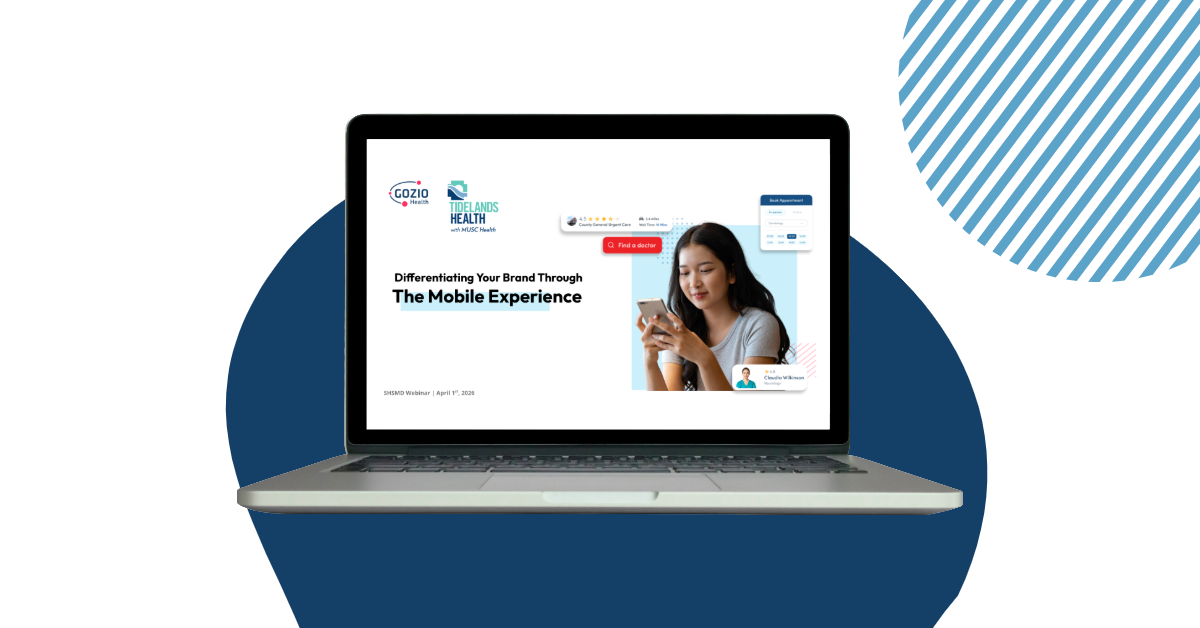
Gozio CEO Joshua Titus outlined this approach in a Modern Healthcare webinar, Use an 80/20 Approach to Drive Mobile Patient Engagement Success, which is available on demand.
Should health systems build or buy a patient app?
For most health systems, buying a proven platform is faster and less risky than building one. Building from scratch takes years, costs more and requires deep expertis
e across mobile development, healthcare integrations and user experience. A ready-made platform can be branded to the health system and launched in weeks, with the core 80% already in place.
What does it take to build a mobile patient engagement platform?
Every successful health system app needs a strong foundational framework. That framework includes:
- Cloud-based architecture that supports over-the-air updates, live data feeds and easy content management.
- Native design for iOS and Android. The two platforms work differently on the back end, so each needs its own build.
- Support for edge cases, such as poor Wi-Fi or restricted data plans.
- Dependency management between features like provider search, scheduling and wayfinding, so one change doesn’t break another.
- Testing before every update, especially when Apple or Google change their hardware or operating systems. When Apple added the notch to the iPhone screen, for example, app designs had to change.
- Navigation that’s simple enough for a good user experience and flexible enough to evolve.
- User experience design, including user stories, iconography and color.
- Accessibility that meets Section 508 standards.
- Smart search that answers questions like: Should results be based on travel time or distance? Is the patient looking for a person or a place? Is it on-site or off-site, indoors or outdoors?
Working through all of this takes skilled developers hundreds of hours, and the list keeps growing as technology changes.
What features should every health system app include?
The 80% every health system needs includes online scheduling, provider search, patient portal access, digital check-in, virtual care, bill pay and wayfinding. Patients expect these tools in one place, not spread across several apps. For more on which features health systems are adopting, download the Digital Health Most Wired Patient Engagement Trend Report.
How can health systems get started?
Start by choosing a platform with the core 80% already built, then identify the 20% that sets your health system apart, such as a signature service line or a unique patient population. Watch the full webinar to learn more, or see how Gozio’s Mobile Experience Platform works.