Should health systems build or buy a patient mobile app?
Most health systems should buy a proven mobile platform rather than build one from scratch. Building takes longer, costs more and requires specialized engineers for years after launch. A platform from an established vendor gives health systems a secure, reliable foundation to brand and customize, so they can focus on what makes their patient experience unique.
Do health system leaders see value in mobile patient engagement?
Yes. In a Gozio survey of 272 health system executives, 9 out of 10 said a robust patient-facing mobile platform could help them deliver on digital strategy goals while addressing critical business issues.
The bigger challenge is making it happen without overloading IT. In a focus group of healthcare CIOs, several said mobile engagement needs an operational owner. “IT can provide the capabilities for mobile services and engagement, but it needs to be owned by someone, operationally, if it is going to be part of a broader engagement strategy,” one CIO said. “It can’t be owned by the IT team.”
What does a successful health system app look like?
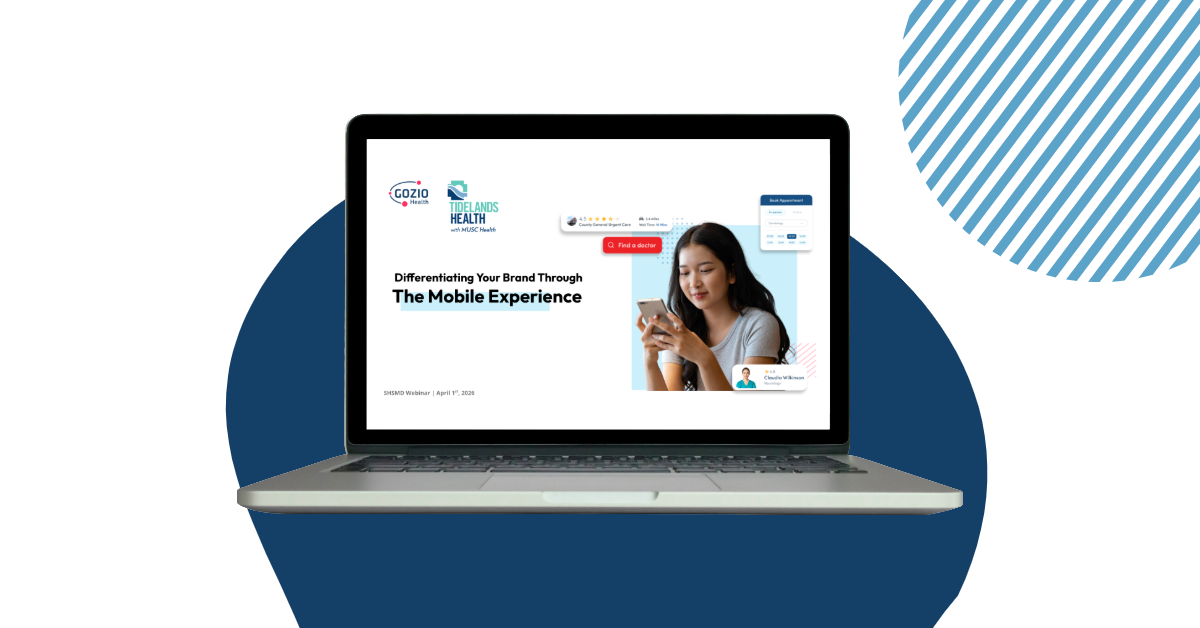
Tidelands Health brought its patient-facing tools into a single branded app and saw 45,000+ downloads in 18 months, along with a 25% drop in primary care calls per visit. Tidelands built on a proven platform rather than starting from scratch.
Why use a vendor platform instead of building in-house?
A quick prototype isn’t the same as a product. A health system app needs to be reliable, secure and able to grow over time, because the organization’s reputation rests on it. There are three main reasons to build on a framework from an established technology vendor:
- You don’t have to build and maintain the core code. Core architecture and data model decisions affect a platform for years, and updating them can disrupt an internal team. Patients don’t see or value this work, but it requires specialized engineers on an ongoing basis for:
- Compliance
- Content management
- Analytics
- Information security
- Software interoperability and compatibility
- You don’t have to keep up with constant updates. Maintaining a mobile app means managing:
- Operating system updates that can affect app performance
- App store reviews that can stall over minor technical details
- Accessibility requirements, so the app works for people with disabilities
- You get access to user experience experts. An established vendor brings product designers as well as engineers. They plan for:
- User journeys across patient flows and staff workflows
- Navigation that reduces cognitive load, using landmarks, architectural features and iconography that match your existing signage
- Custom color palettes that support accessibility and your brand identity
What do CIOs say about building from scratch?
“We don’t have to reinvent the wheel,” one CIO said in the focus group. “Using what others have already learned and applying it saves time and increases the chances of success. There’s simply too much to do to start everything from scratch.”
An established vendor brings that hard-earned experience, and its platform keeps getting enhanced and supported over time. Talk to Gozio about launching a branded patient app without the time and cost of building the framework yourself.