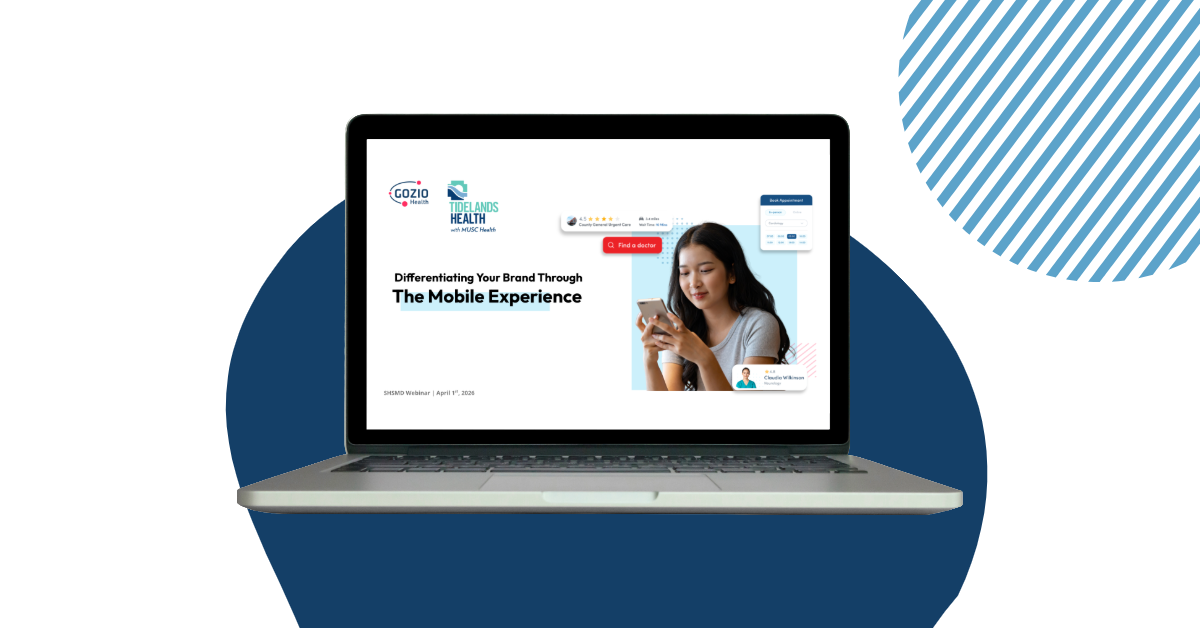
In 2026, a successful mobile strategy for health systems is more than feature-chasing. A successful mobile strategy is one that can adapt and change as the health system itself does.
As budgets tighten, approval cycles lengthen, endless new technologies are being developed, and patient expectations continue to rise, mobile has quietly become one of the most important strategic decisions health systems can make. Not only because of what it does today, but how it can help as you grow in the future.
Organizations pulling ahead are building a mobile strategy as a foundation, not just a one-off project. The advantage when it comes to a strong but flexible foundation is one thing: ownership.
Why do health systems need a flexible mobile strategy?
For a long time, healthcare digital investments have been measured by how innovative they were (or appeared to be). In 2026, that mindset has shifted. Health systems are (rightfully) much more cautious and intentional about their technology investments, and they need tools that can keep them flexible.
New capabilities, such as AI tools and personalization in care journeys, are emerging more quickly than ever before. Health systems are constantly bombarded with promises of efficiency and ROI. This all sounds great in theory, but the reality is that it takes a tremendous amount of effort to evaluate and purchase a tool at a health system, not to mention the lift to implement the tool. As much work as that all is, what comes next is even more important and time consuming; adoption. If patients don’t actually use the tool, the impact never materializes. This is where flexibility becomes essential. A strong mobile foundation that serves as a single, familiar destination for patients can accelerate adoption of new capabilities. Instead of asking users to learn and trust yet another standalone experience, new tools are introduced within an environment they already use and recognize.
Why should health systems own their mobile app?
In today’s environment, flexibility and ownership go hand in hand. Actually owning the mobile app gives health systems not only control, but also the power to evolve without creating disruption for patients. When the patient experience is fully in the hands of the health system, every tool, feature, and interaction can be thoughtfully introduced exactly when it makes sense in the patient journey.
A singular app makes this evolution even smoother. Health systems can pilot new technologies, swap vendors, or add capabilities as priorities and budgets shift without the cost, risk, or friction of a full-scale rollout. Whether introducing AI-driven personalization, updating scheduling systems, or enhancing virtual visit capabilities, backend changes happen without disrupting the front-end experience patients know and rely on.
For patients, the technology itself is invisible. What matters is consistency, simplicity, and trust. Ownership ensures that while systems innovate behind the scenes, the experience in the patient’s hands remains seamless and intuitive.
What defines mobile success for health systems in 2026 and beyond?
Leading health systems, like Rush, are approaching mobile strategy as long-term infrastructure that is a value-driver for the organization rather than a series of one-off projects. By designing platforms for adaptability and continuity, they can move quickly as priorities shift, make lower-risk digital investments, and more easily retire tools that no longer support their strategy.
The right mobile strategy allows health systems to pilot new capabilities, integrate emerging technologies, and sunset outdated features without disrupting patients or clinicians. This approach provides both the flexibility to respond to change and the stability needed to maintain trust, ensuring the front-end experience remains consistent while the back-end evolves.
In 2026, mobile success isn’t measured by the number of features a system offers. The focus is centered on flexibility, ownership, and long-term readiness. Health systems that build adaptable platforms and take control of the patient experience are positioned to thrive amid constant change. With that focus, organizations can adopt innovation on their terms, anticipate inevitable shifts, and deliver a seamless, trusted patient experience. In a rapidly evolving healthcare landscape, ownership isn’t just an advantage; it’s the foundation for sustained success.